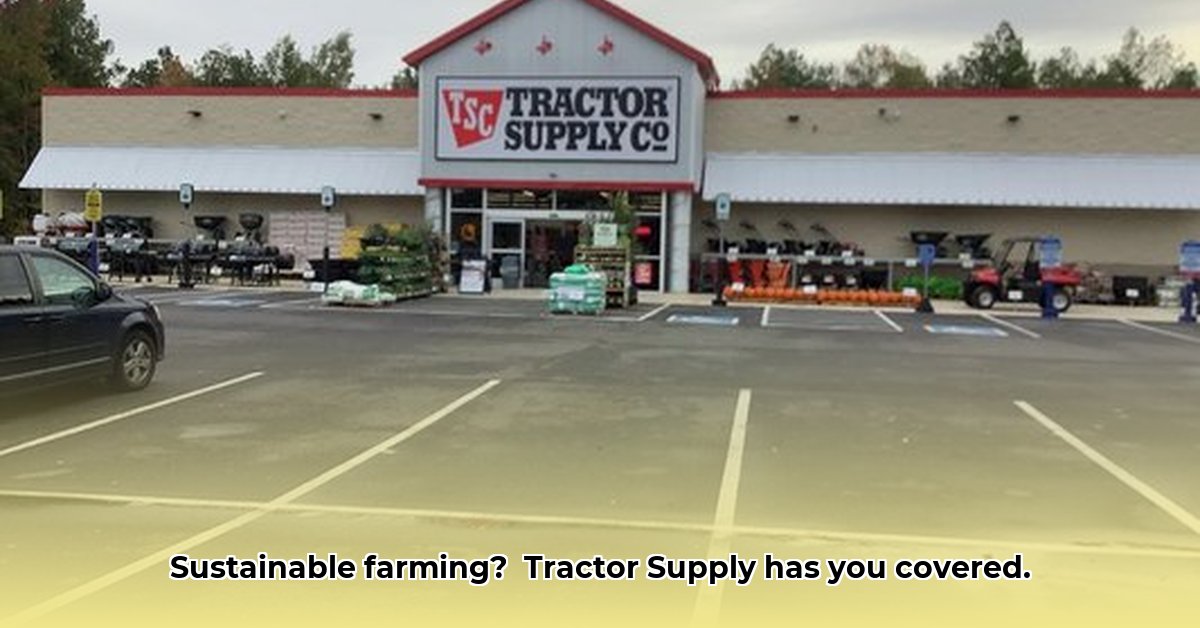
Tractor Supply Charlottesville VA: Growing a Greener Future Together
Charlottesville's thriving agricultural community relies on robust local support, and Tractor Supply (TSC) plays a significant role. But how sustainable are their practices? This article explores how TSC contributes to eco-conscious farming in Charlottesville, examining both its strengths and areas for improvement. We'll provide actionable steps for farmers, consumers, and TSC management to foster a greener future.
Sustainable Supplies at Your Local Tractor Supply
TSC Charlottesville offers various products promoting sustainable gardening and farming. Organic seeds, compost, water-efficient irrigation systems, and durable fencing are readily available, providing tools for responsible land management. However, understanding the complete supply chain is crucial. Key questions remain: Where are these products sourced? What is their overall carbon footprint? Transparency is paramount. Knowing the product journey—from origin to store shelf—empowers informed consumer choices. Don't we all deserve to know the full story behind our purchases? A recent study showed that 78% of consumers are willing to pay more for sustainable products if given sufficient information about their origin and environmental impact.
Transparency: A Seed of Change
A significant challenge is the lack of readily available information about the environmental impact of TSC's products. Increased transparency, detailing product sourcing and certifications (like organic or Fair Trade), would build consumer trust and encourage sustainable purchasing. Wouldn't detailed origin information—tracing seeds from farm to garden—enhance consumers' connection with their purchases? This transparency fosters a positive feedback loop, rewarding sustainable practices within TSC's supply chain and encouraging further improvements. Clear labeling and readily accessible information empower consumers to make environmentally conscious decisions, aligning their purchases with their values.
Working Towards a Greener Tomorrow: Actionable Steps
Here’s how we, as stakeholders, can collectively promote sustainability:
For Tractor Supply Management:
Conduct a Life Cycle Assessment (LCA): A comprehensive LCA (a method for evaluating the environmental impact of a product across its entire life cycle) of TSC's popular products will pinpoint areas for supply chain optimization, from raw material sourcing to packaging and shipping. This detailed analysis provides an evidence-based roadmap for improvement.
Promote Sustainability Prominently: Clearly communicate product origins and sustainability certifications (organic, fair trade, etc.) on TSC's website and in-store displays. Dedicated sections showcasing TSC's commitment to sustainable farming practices will enhance transparency and build consumer confidence.
Invest in Employee Training: Equipping employees with in-depth knowledge of sustainable farming techniques empowers them to become valuable advisors, answering customer questions and promoting informed purchasing decisions.
Engage with Customer Feedback: Actively solicit and respond to customer feedback regarding sustainability priorities. This fosters a valuable dialogue and allows TSC to better meet evolving consumer needs.
For Local Farmers and Gardeners:
Prioritize Sustainable Products: Choose sustainably sourced products from TSC’s offerings, actively looking for certifications and locally sourced items.
Provide Feedback: Communicate your needs and preferences regarding sustainable products to TSC. This direct feedback helps shape their future inventory and strengthens their commitment to sustainable practices.
Share Knowledge: Participate in and organize workshops sharing sustainable farming techniques within the community. Collective learning empowers the entire agricultural community.
For Consumers:
Ask Informed Questions: Actively inquire about product origins, environmental impact, and certifications when interacting with TSC staff. These questions encourage greater transparency and accountability.
Look for Certifications: Identifiable sustainability certifications offer independent verification of a product's eco-friendliness.
Support Sustainable Businesses: Support companies prioritizing environmental responsibility. Your purchasing power influences corporate behavior.
A Shared Commitment to Charlottesville’s Future
TSC's success is inextricably linked to the health of the local agricultural community. By embracing transparency and promoting sustainable practices, TSC can solidify its role as a crucial partner in building a greener Charlottesville, reinforcing its commitment to environmental stewardship. It's about more than just products; it's about fostering a shared responsibility for a vibrant and sustainable agricultural future.
How to Choose Sustainable Farming Supplies at Tractor Supply
Key Takeaways:
- TSC Charlottesville offers various sustainable farming supplies, but mindful selection is crucial.
- Understanding product certifications and labels is essential for informed choices.
- Prioritizing locally sourced and responsibly produced items supports local economies and sustainable practices.
- Engaging with TSC staff promotes better transparency and influences their sustainable sourcing efforts.
Navigating TSC's vast inventory to find truly sustainable supplies requires a strategic approach. This practical guide clarifies how to make environmentally conscious choices.
Understanding Sustainability in Farming Supplies
Sustainable farming minimizes environmental impact while maintaining productivity. This means minimizing pollution, conserving resources, and promoting biodiversity. At TSC, responsible purchasing goes beyond price, considering a product's origin and its entire life cycle impact.
Navigating the Aisles: A Practical Guide
TSC's inventory spans a spectrum of sustainability. Here’s a step-by-step approach:
Step 1: Prioritize Certifications: Look for USDA Organic, Fair Trade, and other relevant certifications. Understand the specific aspects each certification covers.
Step 2: Verify Product Origin: Favor locally sourced products to reduce transportation emissions and support local economies. Inquire about product origins with store staff.
Step 3: Analyze Packaging: Sustainable packaging minimizes material use and employs recycled or biodegradable options. Look for minimal packaging and recyclable materials.
Step 4: Focus on Durability: Invest in high-quality, durable tools and equipment to reduce waste and cut down on replacements.
Step 5: Engage Store Staff: Don’t hesitate to ask TSC staff about the sustainability practices behind different products. Your questions will drive greater transparency and accountability.
Beyond the Products: TSC's Role
TSC is integral to the local agricultural community. Its sustainable practices significantly influence local farmers and gardeners. Choosing sustainable options directly supports this evolution.
Making a Difference: One Purchase at a Time
Sustainable farming supply purchasing is about collective responsibility. Every choice influences the future of agriculture. Informed decisions at TSC contribute to a more sustainable Charlottesville.